
Are you having robotic surgery?
If you are due to have robotic surgery this blog is designed to explain what you can expect and help you understand what will be happening in the operating room during your surgery. Occtopus funded the purchase of a robot for the Churchill Hospital and we couldn’t have done it without your donations so thank you to everyone who has supported us.
What is robotic surgery?
Robotic surgery is similar to keyhole surgery, where a surgeon uses small incisions into the body rather than a large open incision to perform an operation. With robotic surgery, miniature instruments are inserted into the body through small ports and are attached to multiple robotic arms. The surgeon is usually situated away from the patient, performing the surgery using a sophisticated surgical console, which translates their hand and finger movements into real time movements of the robotic instruments inside the patient via anti-tremor technology. The surgeon views the internal operating field through a highly sophisticated imaging system using highly magnified 3DHD and fluorescent imaging.
What are the advantages to robotic surgery?
Robotic surgery is minimally invasive; the robotic instruments are smaller and with much more dexterity than the human hand and wrist it minimises bleeding and damage to surrounding tissue. The risk of infection is less than open surgery and hospital stays post surgery are usually shorter with quicker recovery periods.
Robotic Surgery at OUH
Oxford University Hospitals NHS Foundation Trust has always been at the forefront of cutting edge robotic technology; it was the first hospital in the UK to use the pioneering Da Vinci robotic systems back in 2009, purchased by Occtopus, and has continued to pave the way in advancements with the purchase of two further state-of-the art Da Vinci robots, the X and Xi, in 2011. Surgeons from multiple specialties such as colorectal, urology and gynaecological now utilise the robots to perform key-hole surgery for a variety of conditions.
Colorectal robot
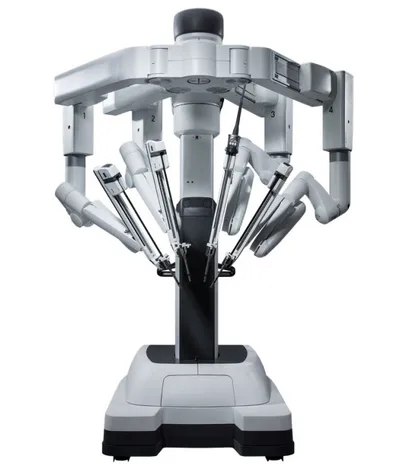
The majority of robotic colorectal operations at the Churchill Hospital in Oxford are performed on the Da Vinci Xi robot, which operates on the most advanced systems. It has four robotic arms mounted on a main upright boom/stand which can be moved around the operating theatre. It has an automated system that allows the arms to be efficiently docked back into position and deployed when needed. It also has a dual console set-up, which allows another surgeon to assist and means Oxford can continue to be at the forefront for training and education in robotic surgery. Surgery can also be shown on the live surgical viewing screen, donated by Occtopus, in the dedicated staff training and resource room.
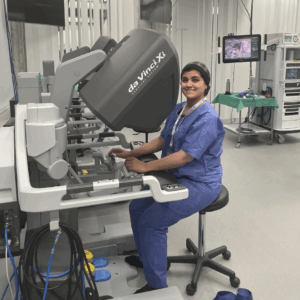
Charlotte El Sayed training on the Da Vinci Xi surgical console which controls the robot, during her research project, funded by Occtopus